
Contact Info
Sunmono Industrial Park, Sunshine Avenue, Jiangxia District, Wuhan City, Hubei Province, China
New York.
A multi layer fabric cutter is a specialized industrial machine designed to cut multiple layers of fabric simultaneously with precision and speed. This equipment represents a significant advancement in textile manufacturing, enabling production facilities to process multiple plies of material in a single operation rather than cutting individual layers sequentially. The machine combines mechanical power, digital control systems, and sophisticated cutting technology to deliver consistent, accurate results across diverse fabric types and thicknesses.
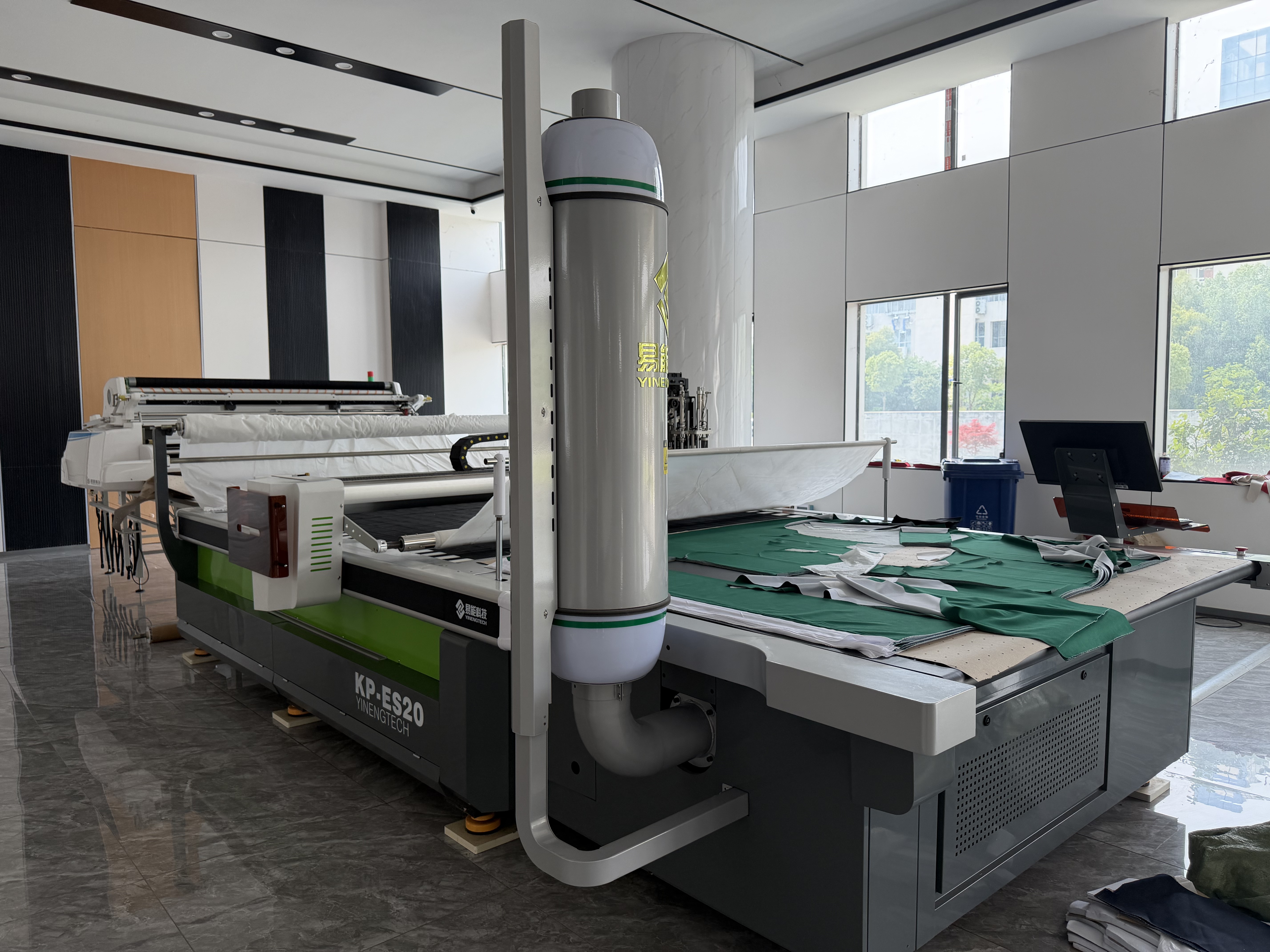
In modern textile facilities, the layer cutting machine serves as a critical production component that directly impacts efficiency, quality, and profitability. Whether processing apparel components, industrial textiles, or technical fabrics, manufacturers rely on fabric slicing equipment to maintain tight tolerances and accelerate throughput. The multi-ply textile cutter addresses the core challenge of handling stacked materials without compromising cut accuracy or material integrity, making it indispensable for high-volume operations.
The layer cutting machine employs a precision cutting head that descends through stacked fabric layers in a controlled, synchronized motion. Unlike handheld cutting tools or manual scissors, this equipment automates the entire process by using CNC technology to guide the cutting path with millimeter accuracy. The machine securely clamps the fabric stack, preventing slippage while the blade or laser element cuts through all layers uniformly, creating identical pieces across the entire batch.
The fabric slicing equipment typically features adjustable cutting speeds and pressure settings, allowing operators to optimize performance for different material weights and compositions. A multi-ply textile cutter can process anywhere from two to twenty or more layers in a single pass, depending on the machine's capacity and the fabric density. This capability eliminates the need for multiple cutting cycles, dramatically reducing labor time and increasing overall production velocity.
Most multi layer fabric cutter systems incorporate several essential elements working in concert. The cutting head houses either a rotary blade, reciprocating knife, or laser optics depending on the machine model and material requirements. A precision registration system ensures that pattern alignment remains consistent from the first layer to the last, critical for patterned fabrics or complex cutting geometries. The control interface, powered by dedicated software, allows programmers to input cutting patterns, adjust parameters, and monitor production in real-time.
Supporting infrastructure includes a material handling system that feeds fabric to the cutting table and a collection mechanism for cut pieces. Some advanced layer cutting machine designs integrate vacuum or pneumatic clamping systems that hold fabric steady during the cut without damaging delicate materials. The frame structure itself is engineered for rigidity and vibration dampening, ensuring that the blade maintains its trajectory even during rapid, repetitive operations.
The fabric slicing equipment delivers exceptional value in apparel manufacturing, where volume and consistency are paramount. Cut components for shirts, trousers, jackets, and other garments require absolute precision to ensure proper fit and assembly at downstream sewing stations. A multi-ply textile cutter can produce hundreds or thousands of identical pieces per shift, with waste rates significantly lower than manual cutting methods. The machine also serves automotive interior production, where dashboard panels, seat covers, and trim components demand high-volume output and tight dimensional control.
Technical textile industries benefit tremendously from the layer cutting machine's ability to handle specialized materials like technical fabrics, composites, and multi-layer laminates. Footwear manufacturers use this equipment to cut uppers, linings, and reinforcement layers with the precision necessary for quality footwear construction. Home furnishing companies produce curtain panels, upholstery components, and bedding elements using the same technology. The multi layer fabric cutter adapts across industries because the fundamental challenge—efficiently and accurately cutting multiple fabric layers—remains universal across these sectors.
Implementing a multi-ply textile cutter in production operations typically reduces cutting labor by 60 to 80 percent compared to traditional methods. The layer cutting machine eliminates the time spent repositioning material, measuring, and manually cutting individual layers. This efficiency gain translates directly to lower per-unit production costs and faster time-to-market for new products. Additionally, the precision of automated fabric slicing equipment minimizes scrap and waste, recovering material value that manual processes often squander.
Quality consistency achieved by the multi layer fabric cutter improves downstream processes as well. When cut components arrive at sewing stations with uniform dimensions and clean edges, assembly becomes faster and defect rates decline. This ripple effect of improved cutting precision reduces rework, returned goods, and customer complaints, further enhancing profitability. For manufacturers operating on thin margins, the investment in automated layer cutting machine technology often pays for itself within months through waste reduction and labor savings alone.
Choosing the right multi layer fabric cutter requires understanding your production volume, material types, and cutting complexity. Low-volume operations might find smaller tabletop models sufficient, while high-speed mass production facilities need industrial-grade systems capable of processing hundreds of pieces hourly. The multi-ply textile cutter you select should match your current production requirements while offering headroom for growth. Consider whether you primarily cut simple geometric shapes or complex patterns with multiple notches and detail elements.
Material compatibility is equally important when evaluating layer cutting machine options. Some equipment performs best with woven fabrics, while others handle knits, non-wovens, or blended materials more effectively. The fabric slicing equipment must accommodate your typical layer stack height without compromising cut quality. Power source, footprint, and integration with existing production workflows should also factor into your selection. Testing sample production runs on candidate machines before purchase helps ensure the multi layer fabric cutter will deliver expected performance in your specific application.
Maximizing results from your layer cutting machine involves proper maintenance, operator training, and process optimization. Regular blade sharpening or replacement, depending on your equipment type, maintains cutting edge quality and prevents fraying or incomplete cuts. The multi-ply textile cutter requires clean working surfaces free of debris that could damage precision components. Operators should understand parameter settings for different materials and receive training on pattern programming and troubleshooting basic issues.
Documentation of cutting patterns, standard settings, and material specifications helps maintain consistency across shifts and staffing changes. The fabric slicing equipment performs best when operators monitor quality output and adjust parameters based on actual results rather than relying solely on preset configurations. Building relationships with equipment manufacturers provides access to technical support, spare parts, and updates that keep your multi layer fabric cutter operating at peak efficiency throughout its operational life.
A multi layer fabric cutter handles a wide range of materials including cotton, synthetics, blends, non-wovens, technical fabrics, and specialty textiles. The layer cutting machine's effectiveness depends on blade type, cutting speed, and pressure settings calibrated for specific material properties. Most fabric slicing equipment can process materials from lightweight silks to heavy-duty canvas and industrial textiles, making the multi-ply textile cutter versatile across diverse manufacturing environments.
The number of layers a layer cutting machine can process simultaneously varies by model and material density. Most equipment handles between two and twenty layers per pass, with some industrial-grade systems processing even thicker stacks. The fabric slicing equipment maintains cut quality consistently across the entire stack, from the top layer to the bottom. Operating specifications provided by the multi layer fabric cutter manufacturer detail maximum stack heights and recommended layer counts for optimal performance.
Regular maintenance for fabric slicing equipment includes blade sharpening or replacement, cleaning of cutting surfaces, and inspection of clamping mechanisms. The multi-ply textile cutter's control system and hydraulic or pneumatic components require periodic checking to ensure reliable operation. Preventative maintenance programs, often recommended by equipment manufacturers, extend the operational life of your multi layer fabric cutter and minimize unexpected downtime during critical production periods.