
Contact Info
Sunmono Industrial Park, Sunshine Avenue, Jiangxia District, Wuhan City, Hubei Province, China
New York.
The modern manufacturing landscape demands precision, speed, and efficiency. A cutter machine has become an indispensable asset across multiple industries, transforming how materials are processed and products are made. Whether you operate in textiles, aerospace, automotive, or specialty manufacturing, understanding how cutting technology impacts your production workflow is critical to maintaining competitive advantage.
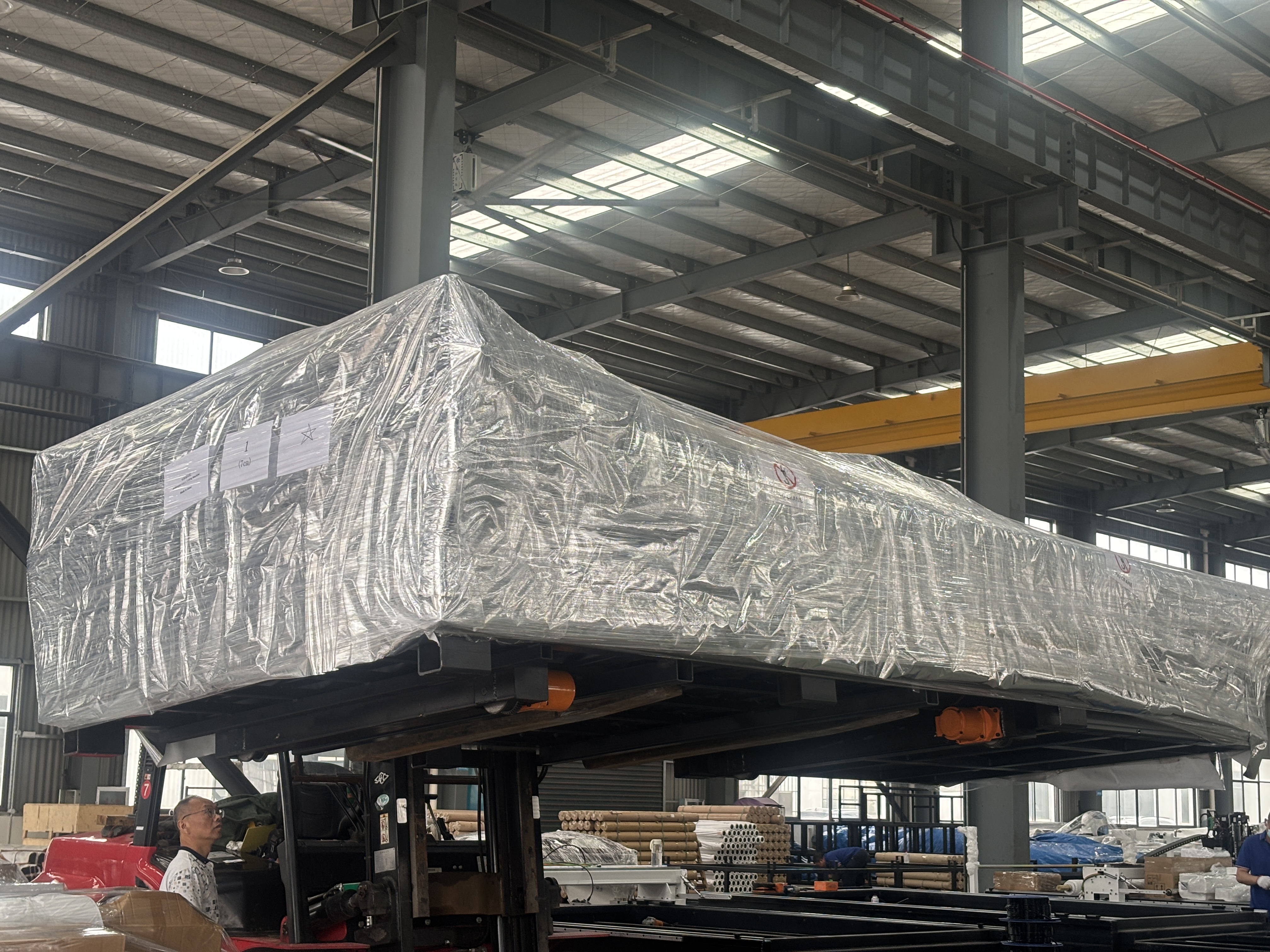
Industries that invest in precision cutting equipment gain measurable improvements in production output, waste reduction, and product quality. The right automated fabric cutter or rotary cutter system can dramatically reduce manual labor, minimize material loss, and accelerate time-to-market. Understanding which sectors derive the greatest benefit from these technologies helps decision-makers allocate resources strategically and identify operational improvements that directly impact profitability.
The fashion industry stands as one of the earliest and most intensive adopters of advanced cutting systems. Textile manufacturers process millions of meters of fabric annually, and an automated fabric cutter delivers unmatched consistency compared to manual cutting methods. A rotary cutter enables operators to cut complex patterns with minimal deviation, ensuring each garment component meets exact specifications regardless of production volume.
Fashion brands increasingly compete on both cost and quality, making precision cutting equipment essential for maintaining margin while scaling production. Whether cutting natural fibers, synthetics, or innovative materials, advanced cutter machines handle layered fabrics with equal precision. This capability reduces rework, minimizes scrap, and accelerates order fulfillment—factors that directly influence customer satisfaction and brand reputation.
Textile manufacturers using modern precision cutting equipment report significant improvements in lead times and material efficiency. A rotary cutter system integrated into production workflows reduces the time required for pattern preparation and material layup, allowing facilities to respond faster to seasonal demand spikes. This agility has become crucial as fast-fashion brands demand shorter production cycles and smaller batch flexibility.
Waste reduction represents another critical advantage in fashion manufacturing. An automated fabric cutter optimizes nesting and layout strategies, ensuring maximum yield from each fabric bolt. Over the course of a year, these efficiency gains compound into substantial cost savings and environmental benefits, supporting both profitability and sustainability goals.
The automotive and aerospace sectors demand cutting-edge precision cutting equipment capable of handling demanding materials and complex geometries. These industries routinely work with composites, laminates, leather, and specialty textiles for interiors, seating, and acoustic components. A cutter machine specifically designed for high-tolerance applications ensures that every cut meets stringent dimensional specifications required by regulatory standards and safety protocols.
Precision cutting equipment in automotive manufacturing directly supports quality assurance and reduces costly rework during assembly. Components cut by a rotary cutter maintain consistency across production runs, enabling seamless integration into assembly lines where even minor dimensional variations can trigger delays. This reliability is particularly critical for suppliers working under just-in-time delivery models, where production delays ripple through entire supply chains.
Aerospace manufacturers often work with specialized materials that are difficult to cut manually—carbon fiber composites, technical textiles, and laminated structures require precise, controlled cutting to prevent delamination or fiber damage. An automated fabric cutter addresses these challenges by applying consistent pressure and speed, protecting material integrity while achieving exact dimensions. This capability is non-negotiable for aircraft component suppliers, where material failure can have catastrophic consequences.
Automotive seating and trim manufacturers benefit enormously from precision cutting equipment that handles diverse material types within a single production facility. A rotary cutter transitions quickly between leather, microfiber, jacquard textiles, and acoustic materials, reducing setup time and enabling flexible batch processing. This versatility supports the industry trend toward modular vehicle designs and customized interior options.
Industries producing nonwoven textiles, geotextiles, filtration media, and technical fabrics rely heavily on advanced cutting technology to process high-volume material with consistent performance characteristics. A cutter machine engineered for these applications handles materials ranging from thin films to thick, densely constructed fabrics without compromising structural integrity. Precision cutting equipment ensures that every roll, sheet, or component meets specified thickness, density, and dimensional tolerances.
Medical textiles, filtration products, and industrial nonwovens demand especially rigorous quality control. An automated fabric cutter integrates with quality assurance protocols, producing documentation and traceability data that prove compliance with regulatory requirements. This level of precision and documentation is essential for suppliers serving pharmaceutical, healthcare, and food processing sectors where material quality directly impacts end-product safety.
The leather industry processes expensive raw materials where waste has direct cost implications. A rotary cutter or automated cutting system optimizes yield by identifying optimal cutting patterns for irregular hides and skins, maximizing usable material while minimizing waste. Leather processors using precision cutting equipment achieve significantly higher utilization rates compared to manual cutting methods, directly improving profitability on each hide processed.
Beyond yield optimization, precision cutting equipment enables leather manufacturers to offer consistent product quality to fashion brands, furniture makers, and automotive suppliers. Uniform thickness, clean edges, and exact dimensions distinguish high-quality leather products and justify premium pricing. A cutter machine that delivers reliable, repeatable results becomes a competitive differentiator for leather suppliers competing in global markets.
Fashion and textile manufacturing lead investment in automated cutting systems, followed closely by automotive, aerospace, and specialty material processors. These sectors recognize that precision cutting equipment delivers quantifiable return on investment through reduced waste, faster production, and improved product quality. Medical device, filtration, and industrial nonwoven manufacturers also prioritize advanced cutting technology due to stringent regulatory and performance requirements.
A rotary cutter operates at consistent speed and pressure, eliminating variations introduced by manual cutting, which reduces material waste and rework. Automated systems process materials faster, require less operator training, and integrate with digital production management systems for real-time monitoring. An automated fabric cutter can cut complex patterns in multiple layers simultaneously, dramatically increasing throughput while maintaining precision that manual methods cannot consistently achieve.
Manufacturers should evaluate material compatibility, production volume requirements, pattern complexity, and integration with existing systems before selecting a cutter machine. The choice between a rotary cutter and alternative cutting technologies depends on the specific materials processed and desired production speed. Precision cutting equipment investments should prioritize reliability, ease of maintenance, operator training support, and the ability to handle the range of materials and specifications your facility processes routinely.