
Contact Info
Sunmono Industrial Park, Sunshine Avenue, Jiangxia District, Wuhan City, Hubei Province, China
New York.
Precision in textile manufacturing depends heavily on the equipment used to process fabrics. A multi layer fabric cutter represents one of the most critical investments for apparel producers, home textile manufacturers, and industrial fabric processors. Understanding the accuracy of these machines is essential for optimizing production quality, reducing material waste, and meeting customer specifications consistently.
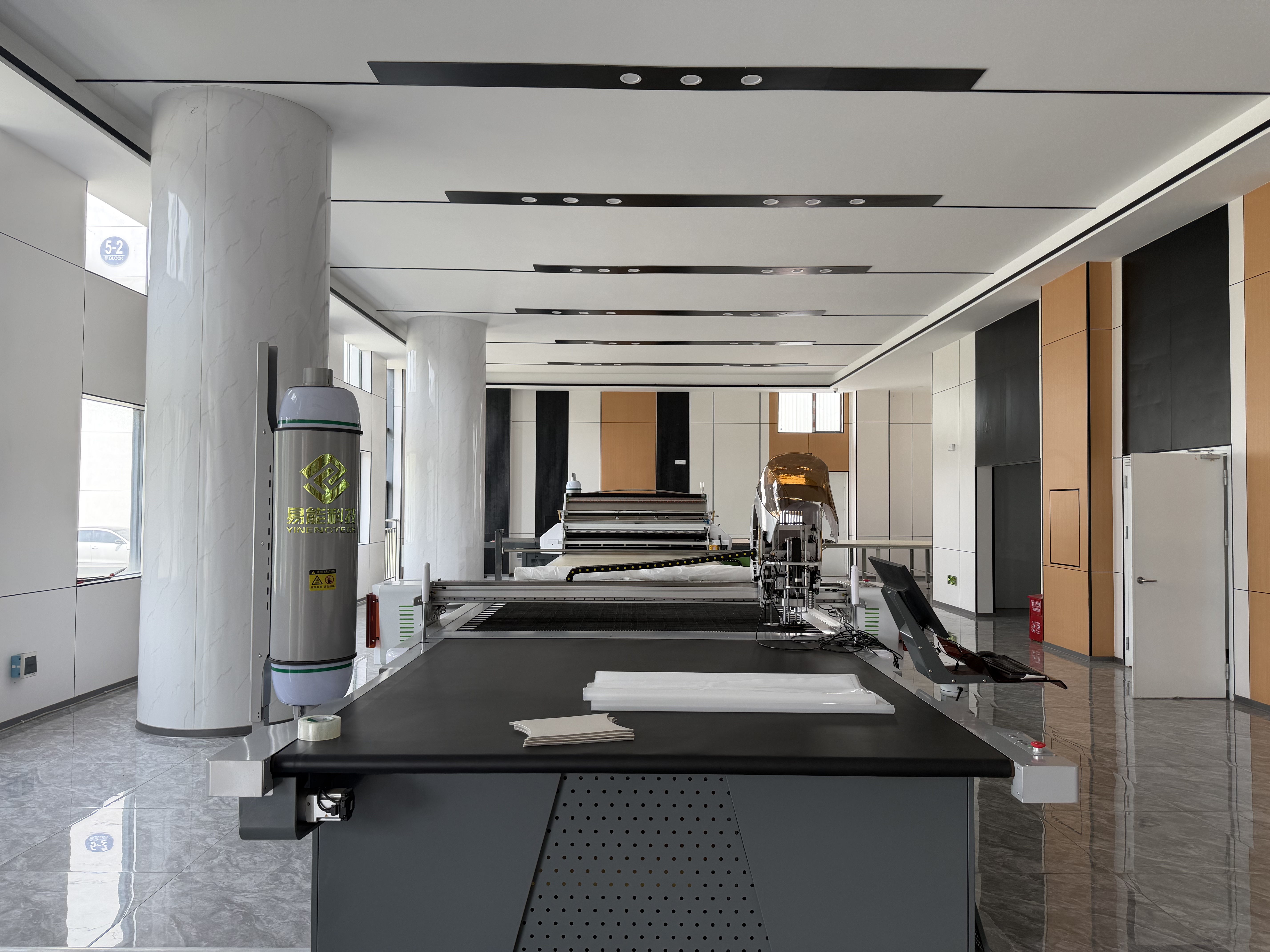
The accuracy of modern fabric slicing equipment has evolved significantly over the past decade. Today's layer cutting machine systems deliver cutting precision that directly impacts the final quality of sewn products. Whether you operate a small custom shop or a large manufacturing facility, understanding the real-world accuracy capabilities and limitations of multi-ply textile cutter technology helps you make informed purchasing decisions and set realistic production expectations.
Accuracy in fabric slicing equipment refers to how closely the machine can cut fabric layers to specified dimensions. Most industrial layer cutting machine systems achieve positional accuracy between 0.5 millimeters to 2 millimeters, depending on the machine class and blade technology. Entry-level fabric slicing equipment typically maintains accuracy around 2 millimeters, while mid-range and high-end multi-ply textile cutter models can achieve precision of 0.5 to 1 millimeter or better. This distinction matters significantly when cutting patterns for fitted garments, precision quilting, or technical textiles where tolerance stacking affects final product quality.
Modern multi layer fabric cutter machines use several technologies to maintain consistent accuracy. Computer numerical control (CNC) systems eliminate manual positioning errors by automating cut path execution based on digital design files. Laser guidance systems help operators align patterns before cutting begins. Blade sharpness and tension directly influence cutting edge quality, with dull blades causing fabric pulls and dimensional drift, while properly tensioned blades produce clean, precise cuts across all fabric layers. The quality of fabric slicing equipment also depends on machine frame rigidity, which prevents vibration and deflection during the cutting process, especially when processing thick multi-layer stacks.
Fabric thickness, fiber content, and weave structure significantly impact the real-world accuracy of any multi layer fabric cutter. Delicate knits and loosely woven fabrics shift more easily during cutting, reducing effective accuracy compared to dense woven or technical textiles. Stack height dramatically influences precision as well—cutting through 10 layers of light cotton maintains better accuracy than cutting 50 layers of thick denim through the same fabric slicing equipment. The layer cutting machine's knife pressure and blade speed must be adjusted for each material type to prevent stretching, pilling, or edge fraying that creates apparent dimensional errors in the finished pattern pieces. Multi-ply textile cutter operators must understand that accuracy is not solely a machine specification but an interactive result between equipment capability and material behavior.
The accuracy of fabric slicing equipment deteriorates over time without proper maintenance. Blade degradation from repeated use, dust accumulation in cutting mechanisms, and calibration drift all contribute to progressively worse cut quality. Layer cutting machine systems that receive regular maintenance—including blade replacement, component lubrication, and positional recalibration—consistently outperform neglected equipment by significant margins. Operator skill also affects practical accuracy; experienced professionals using multi-ply textile cutter machines achieve tighter tolerances than untrained personnel. Environmental factors like temperature fluctuation and humidity variability can cause fabric shrinkage or swelling, which affects pattern alignment and apparent accuracy of the multi layer fabric cutter output.
Contemporary industrial fabric slicing equipment achieves different accuracy levels based on machine category. Basic multi-ply textile cutter models used for straightforward cutting tasks maintain accuracy of ±1.5 to ±2 millimeters. Mid-range layer cutting machine systems with CNC automation typically deliver ±0.5 to ±1 millimeter accuracy. Premium multi layer fabric cutter equipment with advanced guidance systems, servo motors, and precision calibration can achieve ±0.2 to ±0.5 millimeter accuracy. These specifications represent optimal conditions with properly maintained equipment, consistent material properties, and experienced operation. Real-world production often experiences accuracy variations within these ranges due to the material and operational variables discussed previously. Manufacturers should evaluate accuracy specifications against their specific product tolerance requirements, typically considering a 30 to 50 percent safety margin below published machine ratings for planning purposes.
Inadequate cutting accuracy creates cascading problems throughout apparel and textile production. Poor dimensional consistency forces secondary operations like manual trimming or pattern adjustment, adding labor costs and processing time. Accumulated dimensional errors across multiple fabric slicing equipment cuts can make patterns unusable for specific garment sizes or cause assembly problems at sewing stations. Conversely, investing in high-accuracy layer cutting machine technology reduces scrap rates, improves fit consistency, and minimizes customer returns. The multi-ply textile cutter's accuracy directly influences profitability by improving first-pass yield and reducing rework expenses. For high-volume production, even small accuracy improvements translate to significant material and labor savings over thousands of production runs, making the selection of appropriate fabric slicing equipment a crucial financial decision alongside a quality consideration.
The required accuracy depends on your specific products and market expectations. Basic apparel manufacturing often functions adequately with ±1.5 to ±2 millimeter accuracy from standard layer cutting machine systems. Precision-fitted garments, technical textiles, and custom products may require the tighter ±0.5 to ±1 millimeter accuracy that mid-range multi layer fabric cutter equipment provides. Evaluate your tolerance stack-up by calculating how cutting errors compound through pattern pieces, assembly, and final garment fit. When in doubt, consult with your product development team about realistic tolerance requirements before selecting multi-ply textile cutter equipment, as overspecifying accuracy increases capital cost while underspecifying creates quality and customer satisfaction risks.
Blade replacement frequency depends on cutting volume, material types, and desired accuracy maintenance. High-production multi layer fabric cutter systems cutting dense materials may require blade replacement weekly or monthly, while lower-volume operations using layer cutting machine systems on lighter fabrics might replace blades quarterly. Rather than following a fixed schedule, monitor cut quality consistently and replace blades immediately when you notice increased edge fraying, fabric bunching, or dimensional drift from your multi-ply textile cutter. Most manufacturers recommend maintaining spare blade sets readily available to minimize production downtime when fabric slicing equipment performance degrades. Blade quality significantly impacts both accuracy and operational lifespan, so purchasing high-quality replacement blades for your specific multi layer fabric cutter model represents a cost-effective investment in consistent production quality.
Yes, several techniques can enhance the performance of existing fabric slicing equipment without capital investment. First, implement rigorous maintenance protocols including regular blade inspection, replacement, and tension adjustment on your multi layer fabric cutter. Second, ensure thorough staff training on proper material handling, calibration procedures, and operational best practices for your specific layer cutting machine model. Third, standardize fabric preparation by laying and tensioning materials consistently before cutting with your multi-ply textile cutter. Fourth, review and adjust cutting parameters like blade speed and pressure for different material types. Finally, periodically recalibrate your fabric slicing equipment using precision measurement tools. These improvements often achieve 20 to 30 percent accuracy enhancements, potentially extending useful equipment life and deferring more expensive capital upgrades. Track your multi layer fabric cutter's performance metrics over time to identify trends and optimize when upgrades become cost-justified.