
Contact Info
Sunmono Industrial Park, Sunshine Avenue, Jiangxia District, Wuhan City, Hubei Province, China
New York.
Understanding production volume capabilities is essential when evaluating cutting equipment for textile manufacturing. A multi layer fabric cutter represents a significant investment, and manufacturers need to know exactly what output levels they can expect. Production volume directly impacts return on investment, production scheduling, and overall operational efficiency in textile facilities.
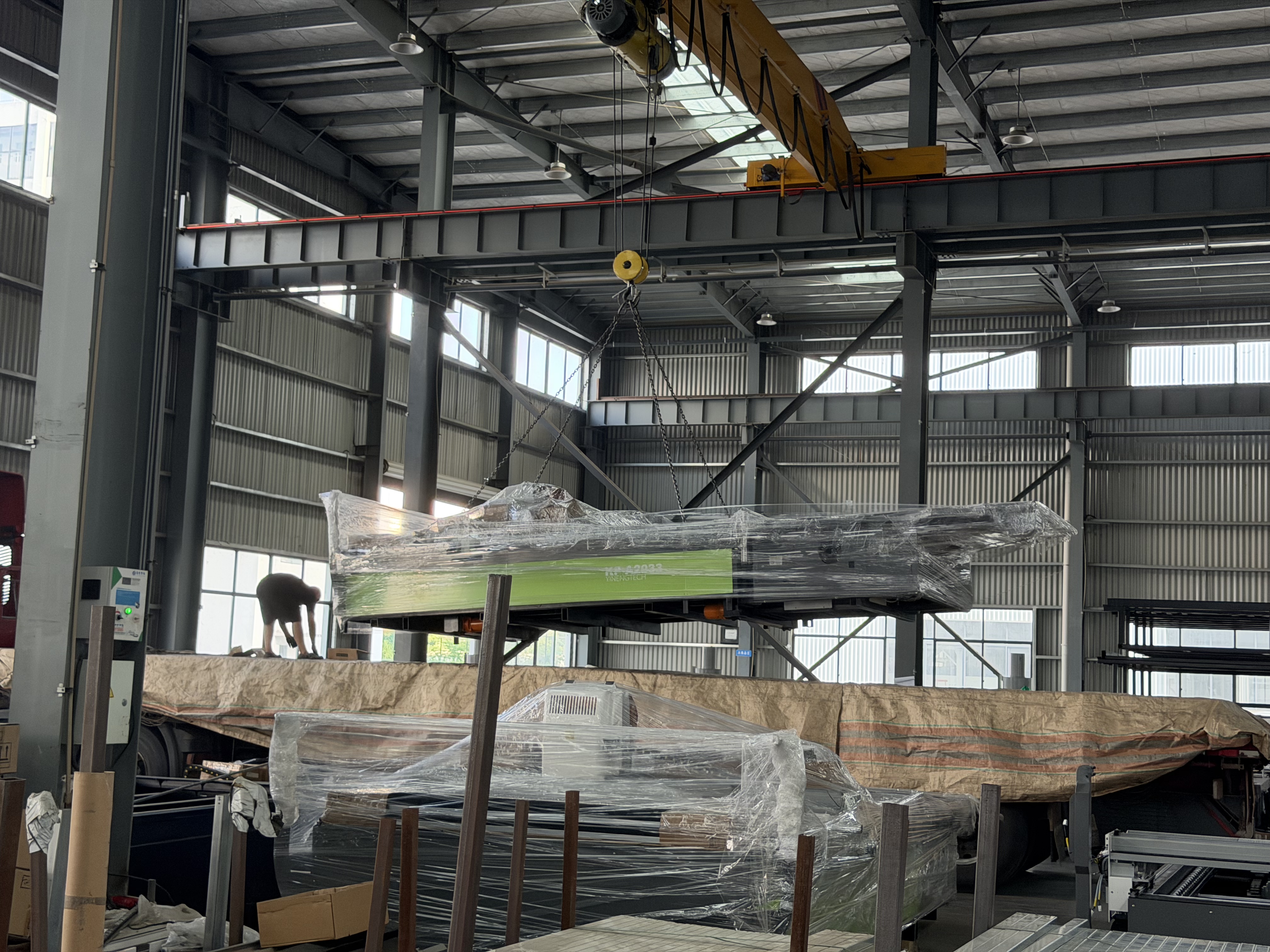
The production volume of a layer cutting machine depends on multiple interconnected factors including blade sharpness, material composition, layer stack height, and automation sophistication. Modern fabric slicing equipment delivers impressive throughput when properly configured and maintained. Knowing the realistic output capacity helps manufacturers align their cutting operations with downstream processes and customer demand patterns.
A multi-ply textile cutter designed for mass production typically achieves between 2,000 and 5,000 cuts per hour, depending on the cutting pattern complexity and material thickness. Layer cutting machines with automated positioning systems can handle substantially higher volumes compared to manual systems. The actual throughput varies significantly based on whether the fabric slicing equipment operates in single-pass or multi-pass mode, the number of layers stacked simultaneously, and the precision requirements of the cut patterns.
Industrial-grade fabric slicing equipment commonly processes 500 to 1,200 meters of fabric per hour when configured for continuous strip cutting. Multi-ply textile cutter systems designed for apparel manufacturing typically cut 100 to 300 garment pieces per hour depending on size and complexity. These output rates represent realistic field performance rather than theoretical maximums, accounting for setup time, quality inspections, and material transitions.
The layer cutting machine achieves different production volumes based on layer stack configuration and cut pattern geometry. Straight cuts through uniform fabric stacks run significantly faster than complex shaped patterns requiring multiple directional changes. Material density directly influences the multi layer fabric cutter's cutting speed, with dense technical fabrics requiring slower blade traverse than lightweight cotton or synthetic blends.
Automation level determines whether fabric slicing equipment achieves maximum potential output. Systems featuring automatic layer positioning, robotic material feeding, and integrated quality control cameras operate at higher sustained volumes than semi-automated alternatives. The multi-ply textile cutter must also account for blade replacement intervals, maintenance windows, and material repositioning time between cutting cycles, which collectively reduce peak theoretical performance to realistic operational capacity.
Manufacturers can substantially increase effective production volume by optimizing batch sizes for their layer cutting machine. Grouping similar cuts minimizes setup transitions and maximizes the fabric slicing equipment's operating time at peak efficiency. A multi layer fabric cutter achieves better overall throughput when processing ten batches of 100 pieces than processing 100 batches of ten pieces, despite identical total piece counts, because setup overhead distributes across more parts.
Multi-ply textile cutter operators should establish standardized cutting sequences that match material arrival schedules with downstream production needs. Quality control integration during the cutting process prevents waste from defective pieces, improving net production volume. Advanced layer cutting machines include waste optimization algorithms that adjust cut patterns to minimize scrap while maintaining throughput, creating efficiency gains without sacrificing output volume.
Industrial facilities can multiply effective production volume by implementing multiple shift operations on their fabric slicing equipment. A multi layer fabric cutter operating two ten-hour shifts daily effectively doubles its annual output compared to single-shift usage. Many manufacturers find that a single high-capacity layer cutting machine running two shifts exceeds the production volume of multiple older or semi-automated systems running single shifts, while requiring substantially less floor space and maintenance.
As production demands increase, the multi-ply textile cutter provides scalability without immediate capacity expansion. Rather than purchasing additional equipment, manufacturers can add production shifts or increase scheduled run time, maximizing return on the existing fabric slicing equipment investment. This flexibility allows gradual growth accommodation while maintaining equipment utilization efficiency and managing capital expenditures strategically.
Apparel manufacturers using a layer cutting machine for shirt or dress production typically cut between 150 and 400 complete garment sets per hour. A multi layer fabric cutter configured for five-layer stacks can process 500 to 800 individual pieces per hour depending on garment complexity. These production volumes support mid-sized factories serving wholesale accounts, while larger operations requiring 1,000 plus pieces daily may deploy multiple fabric slicing equipment units in parallel.
Technical textile producers using multi-ply textile cutters for industrial applications often prioritize precision over maximum speed, accepting lower production volumes in exchange for tighter tolerances and reduced scrap rates. A layer cutting machine processing aerospace or automotive components might achieve 50 to 200 pieces per hour, reflecting the stringent quality requirements rather than equipment capability limitations. The multi layer fabric cutter's value in these applications stems from consistent dimensional accuracy rather than pure volume output.
Contract cutting services operating fabric slicing equipment frequently target 8,000 to 12,000 individual pieces daily using two shifts on a single multi-ply textile cutter. Production volume scales significantly when handling standardized cuts on consistent materials, where the layer cutting machine requires minimal setup adjustment between jobs. High-volume contract cutters maximize their multi layer fabric cutter utilization by scheduling similar materials and patterns sequentially, achieving efficiency levels approaching theoretical maximums.
The actual production volume achieved by any fabric slicing equipment depends more on operational management than equipment specifications. Facilities that maintain rigorous preventive maintenance schedules, invest in operator training, and optimize material flow consistently achieve 20 to 30 percent higher throughput than those running equipment with reactive maintenance and minimal process discipline. A multi layer fabric cutter represents substantial capital, and maximizing its production volume requires commitment to operational excellence beyond the initial equipment selection.
Maximum production volume for a layer cutting machine depends on blade speed, stack height, cut pattern complexity, and material properties. Automation sophistication significantly influences sustained throughput, with robotic systems achieving substantially higher volumes than manual or semi-automated fabric slicing equipment. Operating schedules, maintenance intervals, and operator experience also substantially impact whether a multi-ply textile cutter achieves its theoretical maximum or operates at realistic working capacity.
Yes, production volume can increase significantly through operational optimization without acquiring additional equipment. Adding production shifts, improving material flow, reducing setup transitions, and implementing preventive maintenance can increase effective multi layer fabric cutter output by 30 to 50 percent. Batch optimization, operator training, and waste reduction on existing layer cutting machines often deliver faster payback than capital investment in additional fabric slicing equipment.
Material density, fiber composition, and thickness substantially affect production volume on a multi-ply textile cutter. Dense technical fabrics and layered composites require slower cutting speeds than lightweight single-fiber materials, reducing overall throughput. Layer cutting machines can typically achieve 30 to 50 percent higher production volume on lightweight cotton fabrics compared to heavy industrial textiles, while multi-ply textile cutter precision requirements might demand slower speeds that offset this advantage.