
Contact Info
Sunmono Industrial Park, Sunshine Avenue, Jiangxia District, Wuhan City, Hubei Province, China
New York.
Precision in textile manufacturing directly determines the final product quality, and a cutter machine serves as the foundation for consistent, reliable results. When cutting accuracy falls even slightly below required tolerances, the consequences cascade through production, affecting fit, waste rates, labor costs, and customer satisfaction. Industrial textile operations recognize that investing in high-precision cutting equipment directly impacts their competitive position and profitability. The cutting stage represents a critical control point where quality is established rather than inspected, making equipment choice one of the most consequential production decisions a manufacturer can make.
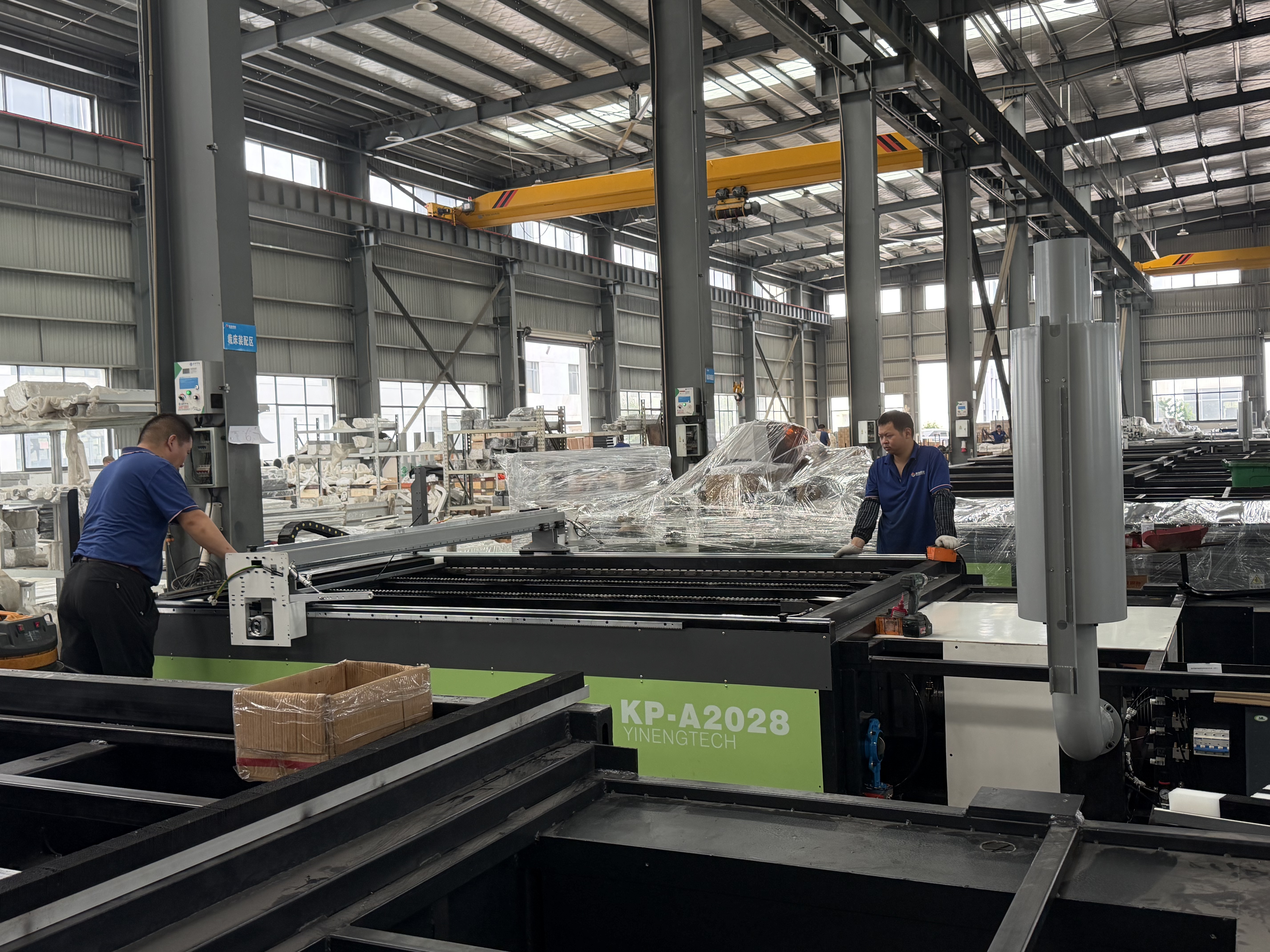
Modern manufacturing environments demand precision cutting equipment that delivers micron-level accuracy across hundreds of layers simultaneously. A rotary cutter with advanced control systems eliminates human variability, maintains consistent edge quality, and accommodates complex fabric patterns without degradation. The relationship between cutting precision and product quality extends beyond simple dimensional accuracy—it influences seam performance, pattern matching, fabric utilization efficiency, and overall aesthetics. Organizations that understand this connection gain measurable advantages in yield, waste reduction, and ability to serve premium market segments where tolerance and quality command higher pricing.
Material waste represents one of the largest controllable costs in textile cutting operations. When a cutter machine operates with precision cutting equipment, each cut follows the exact intended path, eliminating the safety margins that manual or imprecise automated systems require. Traditional cutting methods often leave irregular scrap pieces that cannot be recovered, but precision-controlled cutting creates clean, geometric waste that can be sorted and recycled more effectively. Advanced systems with automated fabric cutter technology position each pattern piece optimally within the fabric layout, maximizing usable output from every meter of material. This optimization compounds across production runs—a one-percent improvement in material utilization directly translates to significant cost savings and environmental benefits over the course of a year.
Imprecise cutting creates dimensional inconsistencies that downstream operations cannot correct. Sewing teams spend extra time aligning pieces that do not fit properly, seams follow incorrect paths due to misaligned edges, and finished garments may require rework or scrapping. A rotary cutter with precision control eliminates these root causes before they create expensive downstream problems. The cost of rework—including labor, inspection, rehandling, and potential customer returns—often exceeds the investment in precision cutting equipment within months of implementation. By preventing defects at the cutting stage, manufacturers reduce their total quality cost and improve their on-time delivery performance, both critical factors in competitive industrial textile markets.
Quality is not a single outcome but a consistent pattern of identical results, batch after batch, regardless of operator shift or material variation. Precision cutting equipment with automated fabric cutter systems delivers this consistency by removing operator skill variation and following identical cutting profiles for every piece. Each pattern repeats with the same dimensions, edge quality, and surface finish because the machine follows programmed instructions rather than relying on manual judgment. This repeatability becomes especially valuable when managing multiple styles, seasonal collections, or custom orders simultaneously. Customers receive predictable quality they can depend on, and manufacturers build reputations for reliability that support premium pricing and customer loyalty in competitive markets.
High-speed cutting operations face a fundamental challenge: faster cutting typically creates edge quality problems, heat damage, and dimensional drift. A precision cutter machine equipped with advanced control systems maintains quality even at elevated speeds because electronic feedback systems continuously monitor and correct the cutting path in real time. Rotary cutter technology with proper precision control can process more layers per hour while actually improving edge quality compared to slower, less-controlled systems. This combination of higher speed and better quality directly improves return on equipment investment and production capacity utilization. Manufacturers can expand their business volume without requiring additional floor space or proportional increases in labor, a competitive advantage that translates directly to improved profitability.
Premium textile applications—including high-end apparel, performance fabrics, and technical textiles—demand cutting precision that only advanced precision cutting equipment can deliver consistently. Designer brands require dimensional accuracy within narrow ranges to maintain pattern matching, ensure proper fit across size runs, and preserve the visual integrity of their collections. Automated fabric cutter systems with closed-loop feedback and micron-level positioning capabilities meet these exacting standards reliably. The ability to hold tight tolerances becomes a market differentiator that opens access to customers willing to pay significantly more for proven quality. Precision equipment investment becomes not just a cost center but a revenue-enabling capability that expands addressable markets.
When production teams work with a cutter machine system they can trust to deliver precise, repeatable cuts, they develop confidence in their processes and ability to meet customer specifications consistently. This confidence extends beyond cutting itself—teams become more engaged, documentation becomes more reliable, and the entire quality culture strengthens. Compliance with industry standards and customer specifications becomes demonstrable rather than aspirational. Audit trails from precision cutting equipment provide objective evidence of process control and traceability that regulatory agencies and customer quality teams increasingly require. Organizations using precision cutting equipment build stronger customer relationships because they communicate with data rather than explanations.
Modern precision cutting equipment reduces cutting tolerances to ±0.5mm or better, compared to ±2-3mm typical of manual or older automated systems. This improvement translates to 50-80% reduction in dimensional variation, directly improving pattern match, garment fit, and fabric utilization. The specific improvement depends on material type, layer count, and system configuration, but most manufacturers report measurable quality gains within the first month of operation.
Automated fabric cutter systems deliver maximum benefit with engineered fabrics, performance textiles, and applications requiring tight pattern matching. Natural fiber blends, knits, and stretch materials also benefit significantly because precision cutting equipment maintains consistent edge quality without distortion. Even standard woven fabrics show improvement through reduced waste and faster processing, though the ROI timeline varies by production volume and material type.
While a rotary cutter with precision control reduces direct cutting labor, operators transition to machine programming, material setup, and quality monitoring roles requiring higher skill levels. Total labor costs typically decrease by 30-40% while overall competency requirements increase. Workforce retraining programs help existing team members transition to higher-value roles, improving employee retention and job satisfaction alongside operational improvements.